
Beginner
Artificial Intelligence (AI) & Automation Skilling. KES 2,500
Understanding AI for educators
Discover how Artificial intelligence (AI) could change how we teach and learn. Gain valuable experience discussing and using AI tools.
About this course
The Understanding AI for Educators course provides teachers and instructional leaders with a foundational literacy framework to safely, ethically, and effectively integrate artificial intelligence into modern classrooms.
Course Overview & Description
Course Description:
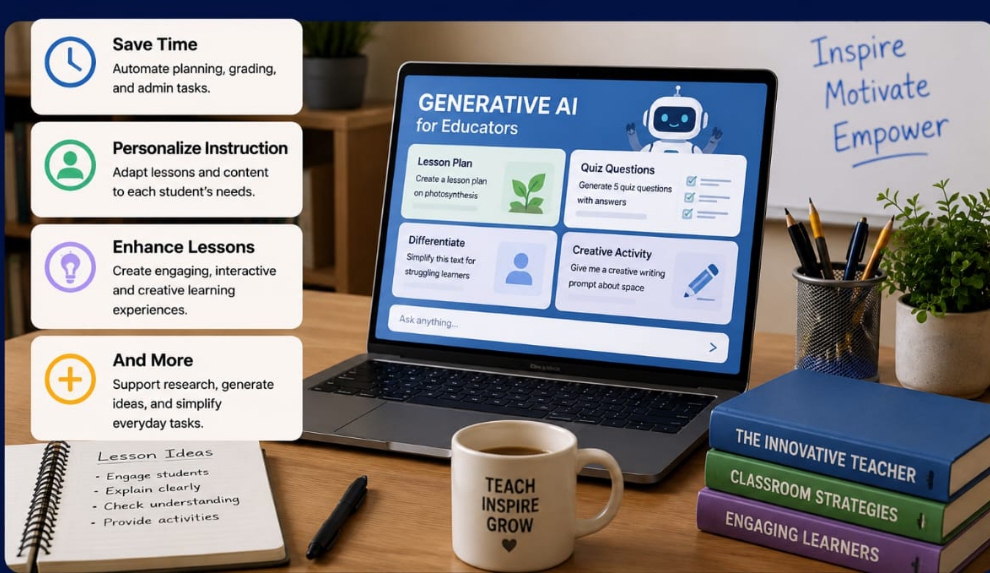
This practice-oriented course demystifies artificial intelligence for educators, bridging the gap between emerging technology and everyday pedagogical design. Participants explore what AI is and is not—moving from predictive models to generative tools like large language models—while examining real-world classroom applications. Through a human-in-the-loop lens, educators learn how to critically evaluate AI outputs, manage data privacy and bias, streamline administrative workflows (such as lesson planning and differentiation), and cultivate vital AI literacy for students. No prior technical background or programming experience is required.
This practice-oriented course demystifies artificial intelligence for educators, bridging the gap between emerging technology and everyday pedagogical design. Participants explore what AI is and is not—moving from predictive models to generative tools like large language models—while examining real-world classroom applications. Through a human-in-the-loop lens, educators learn how to critically evaluate AI outputs, manage data privacy and bias, streamline administrative workflows (such as lesson planning and differentiation), and cultivate vital AI literacy for students. No prior technical background or programming experience is required.
Key Learning Objectives
- Demystify AI Fundamentals: Distinguish between predictive and generative AI systems, understanding how large language models function without heavy technical jargon.
- Integrate Ethically and Responsibly: Navigate critical issues including algorithmic bias, factual hallucinations, data privacy, and academic integrity.
- Enhance Instructional Design: Apply structured prompt engineering (such as clear objective-setting and context-building) to generate high-quality lesson plans, rubrics, and personalized learning materials.
- Foster Student AI Literacy: Design classroom strategies that prepare learners to use AI tools critically, safely, and creatively.
Target Audience
- Primary, JSS, senior secondary and higher-education teachers
- Instructional designers and curriculum developers
- School leaders, academic coordinators, and teaching assistants